
Media
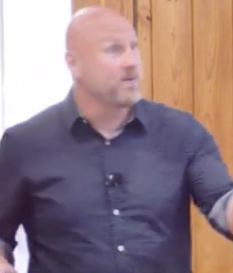
1 Corinthians 15:12-35 - Class 5
Summary
In this fifth installment of the series, Minister Garret Bookout focuses on the first major phase of the study: "What we will be". Specifically addressing the doctrine of bodily resurrection, the lesson navigates Paul's letter to the Corinthian church to combat a ancient form of skepticism—the belief in an afterlife that completely excludes a physical body. Using Paul's strict logical progression, Bookout shows why separating Christ’s resurrection from our own is impossible, defines what it means that Jesus is the "firstfruits," details the cosmic timeline of Christ’s reign over death, and explains the profound moral impact our future bodies have on how we live right now.
Description
In Class 5 of the "New Heaven and New Earth" series, Minister Garret Bookout explores the necessity and reality of a physical, bodily resurrection using 1 Corinthians 15:12-35. He notes that unlike the Sadducees, who rejected life after death entirely, the Corinthians likely held a Greek/Platonic view that the spirit is good but the flesh is inherently bad—leading them to desire a purely ethereal, un-bodied eternity. Bookout reviews Paul's pushback, pointing out that to deny the resurrection of human bodies is to logically claim that Jesus Himself never rose.
The lesson highlights Jesus as the literal "firstfruits," establishing a guarantee that just as physical death entered through Adam, physical resurrection life comes through Christ. This initiates a timeline where Christ actively reigns until all authorities and His final enemy, physical death, are completely destroyed. Finally, the class addresses the ethical danger of denying the body's future value; Bookout emphasizes against popular culture (and a quote from C.S. Lewis) that humans do not merely *have* a body, but *are* a body, soul, and spirit. Therefore, what believers do with their physical bodies today carries immense eternal consequences.
The lesson highlights Jesus as the literal "firstfruits," establishing a guarantee that just as physical death entered through Adam, physical resurrection life comes through Christ. This initiates a timeline where Christ actively reigns until all authorities and His final enemy, physical death, are completely destroyed. Finally, the class addresses the ethical danger of denying the body's future value; Bookout emphasizes against popular culture (and a quote from C.S. Lewis) that humans do not merely *have* a body, but *are* a body, soul, and spirit. Therefore, what believers do with their physical bodies today carries immense eternal consequences.
Outline
I. Introduction and Series Context (vv. 12)
**The Structural Division:** The class series is split into two halves: "What we will be" (the current focus on resurrection bodies) and "Where we will be" (the future location).
**Review of Prior Passages:** * **1 Thessalonians 5:23:** Paul prays for the preservation of the whole spirit, soul, *and* body, refuting the common belief that only the soul goes to God.
**2 Corinthians 4:16–5:10:** Delineates three states of existence: *Present life* (away from the Lord in a temporary "tent" body); *Intermediate death* (away from the body but present as a spirit with the Lord); and *The Ultimate Goal* (eternally with the Lord in a permanent, powerful, resurrected "building" body).
**The Corinthian Context (v. 12):** Unlike the Jerusalem Sadducees who believed death was the absolute end ("Rover, dead all over"), the Corinthians lived in a Greek-philosophical culture influenced by Platonism. They believed the flesh was bad and the spirit was good, thus mocking a physical resurrection in favor of an ethereal spirit-life.
II. The Interconnected Chain of Resurrection Logic (vv. 13–19)
**The Inseparable Link:** You cannot separate the resurrection of Jesus from the resurrection of the dead; if one is false, the other is automatically dismantled.
**The Five Consequences of Denying Bodily Resurrection:**
1. **Christ is still dead:** It inadvertently claims Jesus never broke out of the tomb.
2. **Preaching and Faith are Empty:** All gospel teaching and individual trust are entirely in vain.
3. **Misrepresenting God:** The apostles are exposed as liars who falsified God's actions, an act God detests.
4. **No Salvation:** Believers are completely unforgiven and still trapped dead in their sins.
5. **Eternal Loss:** Dead Christians ("those who have fallen asleep") have permanently vanished and perished.
**The Pitiable Christian:** If our hope in Jesus is bounded only to this current mortal life, Christians are the most tragic and pitiable people on earth.
**The Concept of "Sleep":** Death is described as falling asleep because the biblical intent of lying down always carries the definitive promise of waking back up when the "eternal alarm clock" (the trumpet) sounds.
III. Federal Heads and the Cosmic Timeline (vv. 20–28)
**The Meaning of Firstfruits (v. 20):** Based on Old Testament sacrificial offerings, the "firstfruits" are the very first crop of the season given to God as an act of absolute trust that a massive subsequent harvest is guaranteed to follow.
**The Reality of Christ's Firstfruit Body:** Jesus’ resurrection was not a ghostly spirit; His physical body got up, left the tomb empty, spoke, possessed a recognizable voice, and literally cooked and ate a breakfast of fish with His disciples.
**The Two Adams (vv. 21–22):** * **Adam:** Brought sin and the historic plague of human death which remains functionally undefeated across history. (Even those raised by Elijah, Elisha, or Jesus' miracle with Lazarus eventually died a second time) .
**Christ:** Successfully broke the cycle by dying, rising, and never dying again—bringing definitive resurrection life to all.
**The Order of Events (vv. 23–24):** Resurrection happens sequentially: First Christ, then those who belong to Him at His second coming, followed immediately by "the end" when the kingdom is handed over.
**The Subjection of Christ's Enemies (vv. 25–28):** Christ is actively ruling and conquering from heaven right now.
**The Ultimate Target:** The very final enemy to be completely annihilated is physical death itself.
**God All in All:** When all opposing rule and cosmic authority are subdued under Jesus' feet, the Son will subject Himself back to the Father, bringing about a state where God is "all and in all".
IV. The Moral and Practical Impact of the Body (vv. 29–35)
**The Inconsistency of the Corinthians (v. 29):** The local church was practicing "baptism on behalf of the dead" (a practice Paul mentions factually without explicitly endorsing), showing they obviously believed in an afterlife, making their denial of the body completely illogical.
**The Absurdity of Apostolic Suffering (vv. 30–32):** Paul notes he faces constant peril, fights "beasts at Ephesus," and faces death daily. If there is no physical eternity, putting one's body in constant jeopardy is completely foolish. If the body is just done away with, secular hedonism wins: *"Let us eat and drink, for tomorrow we die"*.
**A Refutation of C.S. Lewis's Quote:** Addressing the popular quote *"You don't have a spirit, you are a spirit; you have a body,"* Bookout explicitly disagrees. Biblical theology asserts you *are* a unit of body, soul, and spirit; the body is a fundamental part of who you are, not an disposable shell.
**The Warning Against Corruption (vv. 33–35):** Paul quotes, *"Bad company ruins good morals"*. Believing that the body is temporary and irrelevant naturally results in severe sins, such as sexual immorality, because people falsely assume what they do physically does not impact their eternal spirit. Denying the body shows a profound lack of the true knowledge of God.
V. Looking Forward to Class 6 (v. 35)
**The Next Question:** Anticipating the rhetorical skeptic's inquiry: *"How are the dead raised and what kind of body do they come?"*.
**Preview of the Next Lesson:** While the resurrection ensures a concrete, physical body that can talk and eat, it will not be identical to our current weak flesh; it will be fundamentally changed, transfigured, and adapted for eternity.
**The Structural Division:** The class series is split into two halves: "What we will be" (the current focus on resurrection bodies) and "Where we will be" (the future location).
**Review of Prior Passages:** * **1 Thessalonians 5:23:** Paul prays for the preservation of the whole spirit, soul, *and* body, refuting the common belief that only the soul goes to God.
**2 Corinthians 4:16–5:10:** Delineates three states of existence: *Present life* (away from the Lord in a temporary "tent" body); *Intermediate death* (away from the body but present as a spirit with the Lord); and *The Ultimate Goal* (eternally with the Lord in a permanent, powerful, resurrected "building" body).
**The Corinthian Context (v. 12):** Unlike the Jerusalem Sadducees who believed death was the absolute end ("Rover, dead all over"), the Corinthians lived in a Greek-philosophical culture influenced by Platonism. They believed the flesh was bad and the spirit was good, thus mocking a physical resurrection in favor of an ethereal spirit-life.
II. The Interconnected Chain of Resurrection Logic (vv. 13–19)
**The Inseparable Link:** You cannot separate the resurrection of Jesus from the resurrection of the dead; if one is false, the other is automatically dismantled.
**The Five Consequences of Denying Bodily Resurrection:**
1. **Christ is still dead:** It inadvertently claims Jesus never broke out of the tomb.
2. **Preaching and Faith are Empty:** All gospel teaching and individual trust are entirely in vain.
3. **Misrepresenting God:** The apostles are exposed as liars who falsified God's actions, an act God detests.
4. **No Salvation:** Believers are completely unforgiven and still trapped dead in their sins.
5. **Eternal Loss:** Dead Christians ("those who have fallen asleep") have permanently vanished and perished.
**The Pitiable Christian:** If our hope in Jesus is bounded only to this current mortal life, Christians are the most tragic and pitiable people on earth.
**The Concept of "Sleep":** Death is described as falling asleep because the biblical intent of lying down always carries the definitive promise of waking back up when the "eternal alarm clock" (the trumpet) sounds.
III. Federal Heads and the Cosmic Timeline (vv. 20–28)
**The Meaning of Firstfruits (v. 20):** Based on Old Testament sacrificial offerings, the "firstfruits" are the very first crop of the season given to God as an act of absolute trust that a massive subsequent harvest is guaranteed to follow.
**The Reality of Christ's Firstfruit Body:** Jesus’ resurrection was not a ghostly spirit; His physical body got up, left the tomb empty, spoke, possessed a recognizable voice, and literally cooked and ate a breakfast of fish with His disciples.
**The Two Adams (vv. 21–22):** * **Adam:** Brought sin and the historic plague of human death which remains functionally undefeated across history. (Even those raised by Elijah, Elisha, or Jesus' miracle with Lazarus eventually died a second time) .
**Christ:** Successfully broke the cycle by dying, rising, and never dying again—bringing definitive resurrection life to all.
**The Order of Events (vv. 23–24):** Resurrection happens sequentially: First Christ, then those who belong to Him at His second coming, followed immediately by "the end" when the kingdom is handed over.
**The Subjection of Christ's Enemies (vv. 25–28):** Christ is actively ruling and conquering from heaven right now.
**The Ultimate Target:** The very final enemy to be completely annihilated is physical death itself.
**God All in All:** When all opposing rule and cosmic authority are subdued under Jesus' feet, the Son will subject Himself back to the Father, bringing about a state where God is "all and in all".
IV. The Moral and Practical Impact of the Body (vv. 29–35)
**The Inconsistency of the Corinthians (v. 29):** The local church was practicing "baptism on behalf of the dead" (a practice Paul mentions factually without explicitly endorsing), showing they obviously believed in an afterlife, making their denial of the body completely illogical.
**The Absurdity of Apostolic Suffering (vv. 30–32):** Paul notes he faces constant peril, fights "beasts at Ephesus," and faces death daily. If there is no physical eternity, putting one's body in constant jeopardy is completely foolish. If the body is just done away with, secular hedonism wins: *"Let us eat and drink, for tomorrow we die"*.
**A Refutation of C.S. Lewis's Quote:** Addressing the popular quote *"You don't have a spirit, you are a spirit; you have a body,"* Bookout explicitly disagrees. Biblical theology asserts you *are* a unit of body, soul, and spirit; the body is a fundamental part of who you are, not an disposable shell.
**The Warning Against Corruption (vv. 33–35):** Paul quotes, *"Bad company ruins good morals"*. Believing that the body is temporary and irrelevant naturally results in severe sins, such as sexual immorality, because people falsely assume what they do physically does not impact their eternal spirit. Denying the body shows a profound lack of the true knowledge of God.
V. Looking Forward to Class 6 (v. 35)
**The Next Question:** Anticipating the rhetorical skeptic's inquiry: *"How are the dead raised and what kind of body do they come?"*.
**Preview of the Next Lesson:** While the resurrection ensures a concrete, physical body that can talk and eat, it will not be identical to our current weak flesh; it will be fundamentally changed, transfigured, and adapted for eternity.
Video
Link copied to clipboard!