
Media
Discipleship - Lesson 4
Summary
In Lesson 4 of the Discipleship series (taught on February 11, 2026), Garrett Bookout focused on Matthew 10:24-25, emphasizing that disciples are not above their teacher (Jesus) nor servants above their master, and the goal is to become like Him amid expected opposition.
Description
The lesson explored Jesus sending out the Twelve with the consistent message "the kingdom of heaven is at hand," as preached by John the Baptist and Jesus Himself, while preparing them for hostility by explaining that if the master (Jesus) is maligned as Beelzebul (ruler of demons), His followers will face even greater maligning; through discussion, the class highlighted the dual relationships of disciple/teacher (learning and imitating) and servant/master (humble obedience), the ultimate aim of discipleship as becoming like Jesus through studying His life (especially in the Gospels), controlling the flesh as He did, and expecting persecution primarily from within one's own religious community (like the Pharisees who opposed Jesus out of envy, tradition, and challenged authority), rather than from outsiders.
Outline
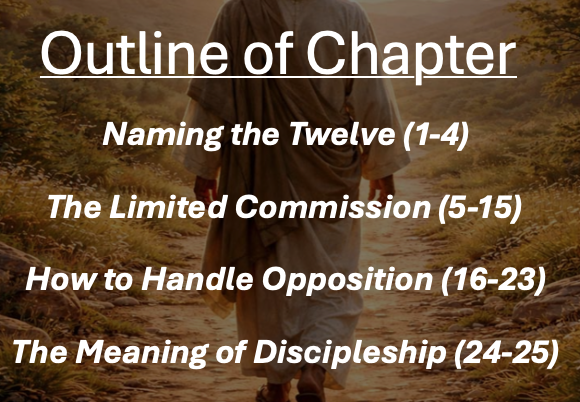
Context: The Limited Commission in Matthew 10, including instructions and handling opposition (verses 5-23 leading into 24-25).
Key Passage: Matthew 10:24-25 – "A disciple is not above his teacher... If they have called the master of the house Beelzebul, how much more will they malign those of his household."
Discussion Questions:
- What is the significance of Jesus describing His relationship to followers as disciple/teacher and servant/master? (Emphasizes humility, authority, learning, and obedience.)
- What is the ultimate goal of a disciple? (To be like his teacher—Jesus—in thought, action, and character.)
- What is the significance of this passage in a persecution context? (Disciples should expect similar rejection as Jesus faced, and learn from His response to it.)
- Who were the primary persecutors of Jesus and why? (Primarily Israelites/Pharisees, due to correction of traditions, envy, and threats to their power/authority.)
Closing reflection: Are we more concerned with being thought well of, or with being like Jesus? (Prioritize pleasing God over human approval.)
Key Passage: Matthew 10:24-25 – "A disciple is not above his teacher... If they have called the master of the house Beelzebul, how much more will they malign those of his household."
Discussion Questions:
- What is the significance of Jesus describing His relationship to followers as disciple/teacher and servant/master? (Emphasizes humility, authority, learning, and obedience.)
- What is the ultimate goal of a disciple? (To be like his teacher—Jesus—in thought, action, and character.)
- What is the significance of this passage in a persecution context? (Disciples should expect similar rejection as Jesus faced, and learn from His response to it.)
- Who were the primary persecutors of Jesus and why? (Primarily Israelites/Pharisees, due to correction of traditions, envy, and threats to their power/authority.)
Closing reflection: Are we more concerned with being thought well of, or with being like Jesus? (Prioritize pleasing God over human approval.)
Video
Link copied to clipboard!