
Media
The Greatest Commands - Introduction
Summary
This introductory Bible lesson by Shaun Calix explores the Greatest Commandments—to love God with all your heart, soul, and mind, and to love your neighbor as yourself—as the foundational summary of the entire Law and the Prophets, drawing from Jesus' response in Matthew 22:34-40.
Description
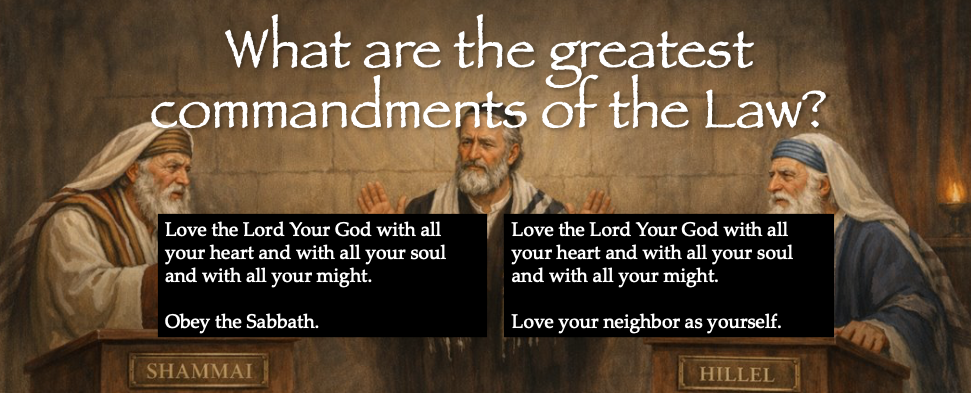
In this opening class session, teacher Shaun Calix introduces the topic of the Greatest Commandments as a key hermeneutical lens for understanding Scripture, explaining how Jesus quoted Deuteronomy 6:4-5 and Leviticus 19:18 to answer a Pharisee's test question in the temple during his final week. He contrasts Jesus' emphasis on love with the more legalistic views of rabbis like Shammai (who prioritized perfect obedience and Sabbath-keeping) and Hillel (who aligned closely with love for God and neighbor), showing how Jesus' teachings generally align with Hillel's love-centered approach while not fully endorsing either school. The lesson examines supporting passages like Romans 13:8-10, 1 John 4:20-21, and the Parable of the Good Samaritan in Luke 10, highlighting the interdependence of loving God and loving others, and challenges listeners to see love for neighbor as extending broadly without artificial limits; homework assignments include reading Deuteronomy 6 and Leviticus 19 to explore God's reasons for these commands and the scope of "neighbor," with future sessions planned to trace these themes even before the Law in stories like Abraham and Joseph.
Outline
Introduction and Personal Motivation
- Teacher expresses long-held desire to teach on this topic.
- Concept of "summary passages" in Scripture (e.g., Micah 6:8).
- Greatest Commandments as the ultimate summary on which all the Law and Prophets depend.
Context in Matthew 22:34-40
- Pharisees attempt to test/trap Jesus after he silences the Sadducees.
- Jesus' answer: Love God fully (Deut. 6:5) as first/greatest; love neighbor as self (Lev. 19:18) as second and like it.
- These two encompass the entire Law and Prophets.
Historical Rabbinic Background
- Schools of Shammai (legalistic, perfect obedience, Sabbath as key second command) vs. Hillel (love God first, love neighbor second).
- Jesus aligns most closely with Hillel's love emphasis, though not exclusively.
Interdependence of the Two Commands
- Loving God motivates and enables true love for neighbor (showing God's love).
- Claiming to love God while hating neighbor makes one a liar (1 John 4:20-21).
- Loving neighbor without loving God may stem from selfish motives.
- Supporting texts: Romans 13:8-10 (love fulfills the law); James implied.
The Parable of the Good Samaritan (Luke 10:25-37)
- Lawyer seeks to justify himself by asking "Who is my neighbor?"
- Jesus flips the question: "Who proved to be a neighbor?" (answer: the one showing mercy).
- Command: "Go and do likewise" — focus on being a neighbor to anyone in need, without limits.
Homework and Preview
- Read Deuteronomy 6 (whole) and Leviticus 19:9-18: reasons to love God; who counts as neighbor.
- Future: Explore pre-Law examples (Abraham, Joseph) of loving God and neighbor.
- Teacher expresses long-held desire to teach on this topic.
- Concept of "summary passages" in Scripture (e.g., Micah 6:8).
- Greatest Commandments as the ultimate summary on which all the Law and Prophets depend.
Context in Matthew 22:34-40
- Pharisees attempt to test/trap Jesus after he silences the Sadducees.
- Jesus' answer: Love God fully (Deut. 6:5) as first/greatest; love neighbor as self (Lev. 19:18) as second and like it.
- These two encompass the entire Law and Prophets.
Historical Rabbinic Background
- Schools of Shammai (legalistic, perfect obedience, Sabbath as key second command) vs. Hillel (love God first, love neighbor second).
- Jesus aligns most closely with Hillel's love emphasis, though not exclusively.
Interdependence of the Two Commands
- Loving God motivates and enables true love for neighbor (showing God's love).
- Claiming to love God while hating neighbor makes one a liar (1 John 4:20-21).
- Loving neighbor without loving God may stem from selfish motives.
- Supporting texts: Romans 13:8-10 (love fulfills the law); James implied.
The Parable of the Good Samaritan (Luke 10:25-37)
- Lawyer seeks to justify himself by asking "Who is my neighbor?"
- Jesus flips the question: "Who proved to be a neighbor?" (answer: the one showing mercy).
- Command: "Go and do likewise" — focus on being a neighbor to anyone in need, without limits.
Homework and Preview
- Read Deuteronomy 6 (whole) and Leviticus 19:9-18: reasons to love God; who counts as neighbor.
- Future: Explore pre-Law examples (Abraham, Joseph) of loving God and neighbor.
Video
Link copied to clipboard!